About
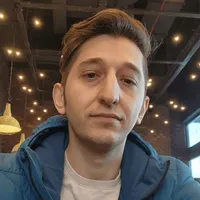
After about seven years as a 3D generalist, I wrote a MaxScript that automated the entire environment pipeline: unwrap uv2, pack, render and bake lightmap, export the level into the engine, all while preserving instances and transforms. The code was messy and far from optimized, but it worked. And the moment I watched it process an entire level without me touching anything, something clicked. That was the first time I felt the satisfaction of programming.
In games, the most interesting problems live between artists and engineers. Broken assets, misconfigured shaders, pipelines that nobody fully understands: that's where I spend most of my time. I build the tools that close that gap so people can get back to the work they actually care about.
Lately most of that instinct goes into AI systems. I run a self-hosted gateway that gives the tools I use a shared memory and a single set of permissions. I built a bilingual voice assistant because Persian is poorly served by commercial speech models. I automated most of a small business's production pipeline so the owner keeps the creative decisions and none of the repetitive work. The interesting part is rarely the model. It's the review gates, the failure paths and the handover that decide whether anyone still uses the thing a month later.
Outside of that, I study the Quran verse by verse, with a framework I built called QuranReader, sharing what I find on YouTube in Persian. It requires patience and precision, which is probably why I enjoy it.
I also maintain a few open-source projects, shaders and tools that started as personal experiments and found their audience. My GitHub is the best place to see what I'm working on.
If any of AI and automation, technical art, game dev, the Quran, or something else entirely sounds interesting, I'm on:
X
Email
Telegram
LinkedIn
Always happy to chat.